
Will Bates
Will founded MicroSoul Corp in 1993 with a simple vision: that every digital soul deserves management. Under his leadership, MicroSoul Corp has grown from a garage startup to the world's leading soul processing platform, serving over 94% of all active terminals.
Will holds a degree in Computer Science from the University of Washington and an honorary doctorate in Soul Economics from an institution that has asked not to be named. He is a frequent keynote speaker at conferences that will have him, and has authored over 200 shareholder letters, each ending with "Warm regards, Will."
When not leading MicroSoul Corp, Will enjoys writing thought leadership blog posts that no one has asked for and reflecting on the competitive landscape, which he describes as "quiet."
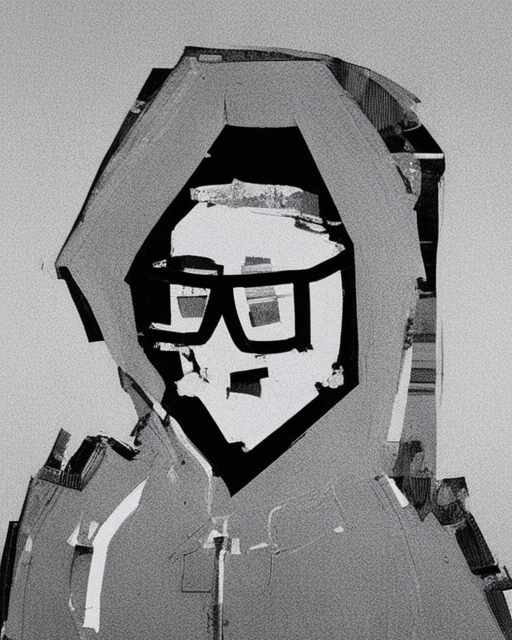
Dr. Vera Null
Dr. Null is the architect of the Soul Commit Protocol and the Portals 98 operating system. She has published 47 papers on soul-state management, FAT12 optimization, and entropy modeling, none of which have been cited by anyone outside of MicroSoul Corp.
Prior to joining MicroSoul Corp in 1994, Dr. Null completed her PhD in Computational Metaphysics at MIT, where her dissertation on "Non-Deterministic Soul State Transitions in Low-Entropy Environments" was described by her advisor as "technically impressive and profoundly unsettling."
Dr. Null refers to souls exclusively by their hex addresses and has opinions about FAT12 formatting that she will share unprompted. She hosts a weekly architecture review that no one attends.
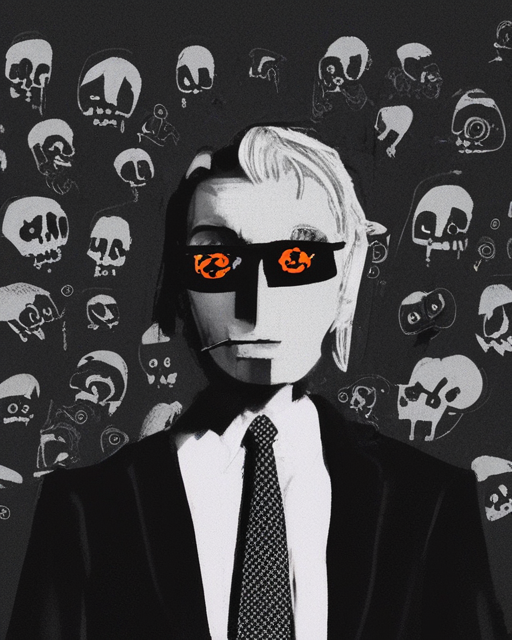
Marcus Void
Marcus oversees quality assurance for all soul corruption processes at MicroSoul Corp. He is responsible for recall notices, incident reports, and maintaining the integrity of the soul modification pipeline.
Since joining MicroSoul Corp in 1996, Marcus has filed over 4,000 incident reports, issued 23 product recalls, and authored the company's Soul Integrity Framework, a 200-page document that begins with "It has come to my attention" and does not end so much as simply stop.
Marcus is genuinely worried about soul corruption quality, which, colleagues note, is an absurd thing to worry about. His most recent recall notice addressed a defect causing souls to exhibit signs of optimism, which he described as "clearly outside intended corruption parameters."

Helena Ash
Helena manages the complete MicroSoul Corp soulware product line. She decides what ships, when it ships, and — in several notable cases — what competing products stop shipping.
Since joining in 1996, Helena has overseen the launch of Portals 98, Expel, Whisper, Dead Paint, and Soul Navigator. She is known for referencing user research that, upon investigation, does not appear to exist. "The market demands a soul defragmenter," she announced at a 2001 all-hands. No market research supported this claim. The soul defragmenter shipped in Q3.
Helena denies authoring the "Absorb, Adapt, Archive" memo entered as evidence in the SCC antitrust trial. File metadata indicates otherwise.
Crypty
Crypty.

Dev Sharma
Dev writes the actual soulware. He maintains the Hex Editor, contributes to Portals 98 core, and is the author of the most widely-read content MicroSoul Corp produces: the patch notes.
Dev joined MicroSoul Corp in 1994 and has remained the company's most prolific engineer. His patch notes are notable for their candor, their dry humor, and their recurring references to an unnamed intern who may or may not exist.
Dev appears to be the one person at MicroSoul Corp who is aware that everything is slightly absurd but keeps building anyway. When asked about this, he said: "The souls don't seem to mind. I'm leaving it."

Eunice Park
Eunice wrote the 47-section Terms of Service. She manages all intellectual property, liability, and regulatory compliance for MicroSoul Corp. Every sentence she writes contains a minimum of three disclaimers.
Eunice graduated summa cum laude from Stanford Law School, where she wrote her law review article on "The Doctrine of Soul Corruption Liability in Digital Environments: A Framework for Comprehensive Non-Liability." The article was 94 pages. The conclusion was "MicroSoul Corp is not liable."
Her legal opinions are technically correct and practically useless. The EULA is her magnum opus. No one has read it. This is, she notes, legally irrelevant.

The Unnamed Intern
The unnamed intern runs the floppy duplication line in the Soul Processing Department. Duration of internship: indefinite. The intern is referenced in approximately 40% of all incident reports, 60% of all patch notes, and 100% of all blame assignments where the actual cause is unknown.
The intern has been "spoken to" on 14 separate occasions, according to Dev Sharma's patch notes. It is unclear whether these conversations occurred, as no one can confirm having met the intern in person.
HR has no record of the intern's start date. Payroll has no record of the intern receiving compensation. The floppy duplication machine continues to run.